Industrial batteries
New rules for industrial batteries: working together to get it right
New legal obligations for industrial batteries have been in force since 18 August 2025. These may also apply to your business. The rules do not apply solely to companies that manufacture batteries themselves: under the law, importers and distributors may also be considered producers. The decisive factor is who places the battery on the market in the Netherlands for the first time. As a producer, you are also responsible for the battery once it is discarded. This is known as Extended Producer Responsibility (EPR). The trade associations BMWT, Holland Solar and Energy Storage NL have expressed their intention to jointly investigate whether a collective solution is possible, enabling producers to fulfil these obligations collectively to a large extent in the future.
The aim is, should a collective solution be agreed upon, to roll it out in phases from 2027. Until then, you can already start preparing your business. On this website, you can find out what the new rules mean for your business, what benefits a collective solution can offer, and what you can do right now.
New rules for manufactures and importers
Since 18 August 2025, new rules have been in force across Europe for manufacturers and importers of industrial batteries. These rules fall under the Extended Producer Responsibility (EPR) scheme. Are you a manufacturer or importer of industrial batteries? If so, you are responsible for the collection and treatment of these batteries at the end of their life. Among other things, you must ensure:
- registration and reporting
- the collection of waste batteries
- safe and responsible treatment and recycling
- the financing of these activities
The most efficient way to meet these obligations may be to organise some of them collectively. A collective solution could, for example, support producers in organising collection, processing, funding and reporting. The trade associations are currently investigating whether and how such a collective approach for industrial batteries can be set up. Individual implementation is possible, but to do so you must comply with all legal requirements yourself and obtain approval from the government.
Registration is compulsory
As a producer, you must comply with the UPV obligations and be registered in Rijkswaterstaat’s Register of Producers. Compliance with these obligations is a condition for registration. If you are not registered, you are not permitted to place industrial batteries on the Dutch market. The Human Environment and Transport Inspectorate (ILT) monitors compliance and may take enforcement action.
Research into a collective solution
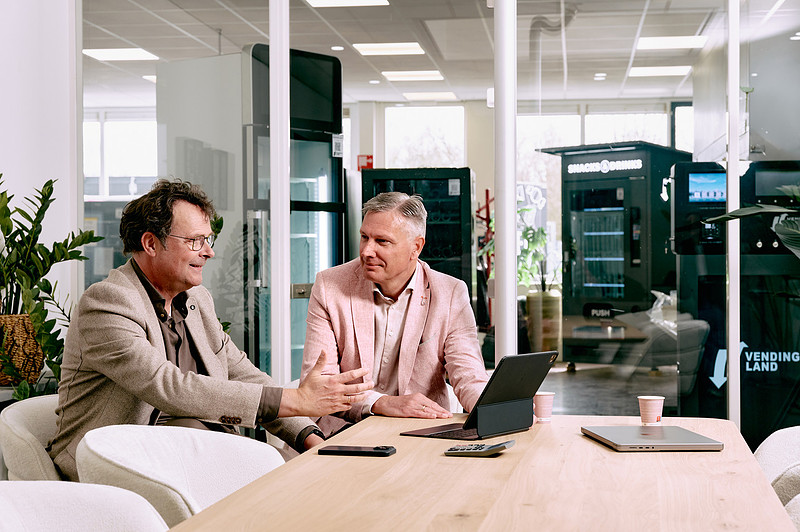
To assist manufacturers in this regard, the trade associations BMWT, Holland Solar and Energy Storage NL have announced their intention to jointly investigate whether a collective solution for industrial batteries is feasible. As part of this research, they are looking into a joint national system for the collection, processing and financing of industrial batteries. Under the proposed structure, the OPEN Foundation will be the implementing organisation, operating on behalf of the UPV Industrial Batteries Foundation. The OPEN Foundation is the organisation responsible in the Netherlands for the collection and recycling of end-of-life appliances, light bulbs and batteries – including (bicycle) batteries and solar panels.
The potential collective solution is currently being investigated in more detail. The scope, fees, conditions of participation and operating procedures are currently being further developed and submitted to the government for approval.
If a decision is taken to proceed with the implementation of a collective solution, the aim is to launch it in phases from 1 January 2027. Initially, this will involve the registration of producers and importers as participants in the collective scheme, along with the batteries they place on the market. The plan is to commence collection and processing from 1 July 2027. These are target dates.

A phased approach
Industrial batteries are used for a wide variety of applications, such as energy storage, machinery and other industrial uses. Their size, weight, composition, lifespan and safety risks can also vary considerably. That is why the plan is to build the system up step by step.
In the first phase, we will focus on a number of segments within the industrial battery category that align with the sectors covered by BMWT, Holland Solar and Energy Storage NL. These include home batteries, energy storage systems and traction batteries for, amongst other things, internal transport, excavators and forklift trucks. Within these segments, we will start with battery systems with a capacity of up to 1 megawatt (MW). Larger systems will follow at a later stage.
As a manufacturer or importer, you do not need to be a member of any of these trade associations to take part. Other manufacturers and importers who supply batteries from these segments to the Dutch market may also join in the first phase.
The intention is then to expand the scheme step by step to include larger battery systems and other sectors. In this way, we will increase the volume, capitalise on economies of scale and ensure that implementation remains as cost-effective as possible for all participating manufacturers.
Why join the UPV Industrial Batteries Foundation?
Setting up a fully customised collection and processing system on your own is complicated and costly.
By joining a collective solution, you benefit from:
- a single, joint and cost-effective national organisation
- an extensive network for safe collection and processing
- expert support with legislation and regulations
- fulfilment of the statutory UPV obligations for the specified segments
- joint reporting to the government
- a level playing field for all producers and importers
This allows you to focus on your own business operations, whilst the fulfilment of WEEE obligations can be managed professionally and cost-effectively by Stichting OPEN. Stichting OPEN has many years’ experience in the collection and recycling of waste electrical and electronic equipment, lamps, batteries, bicycle batteries and solar panels. Obligations such as product safety, conformity, labelling and product information remain the responsibility of the market participant. The intended start date for joining the scheme is 1 January 2027.
What can you do right now?
The conditions, rates and exact procedure for participation are currently being finalised. This means you cannot yet register definitively. However, you can start preparing now:
- identify which industrial batteries your company manufactures or imports
- check that your registration is up to date via Rijkswaterstaat’s Producers’ Register
- make sure you know how many batteries you place on the market in the Netherlands
- collect data on the type, weight, composition and application of these batteries
- identify existing arrangements regarding collection and processing
On this website, we will be sharing more information in the coming period about participation, conditions, fees and the launch of the system.

Industrial batteries contain important raw materials. By collecting and processing batteries properly, these raw materials can be reused. Together with manufacturers, importers and supply chain partners, we are building a future-proof, circular system for industrial batteries!
Peter de Haan
accountmanager, Stichting OPEN
Stay up to date with the latest developments
Registration will be open from 1 January 2027. If you’d like to stay informed, please leave your email address!
Questions
Below you’ll find the most frequently asked questions and answers. Do you have any questions? Please get in touch!
-
What is UPV?
UPV stands for Extended Producer Responsibility. This means that producers are responsible for their batteries, even once they have been discarded.
For industrial batteries, you must, amongst other things, ensure registration, collection, transport, processing, financing and reporting.
You can fulfil these obligations yourself or join a collective that organises some of these tasks on your behalf.
-
When am I considered a manufacturer of industrial batteries?
The rules do not apply solely to manufacturers of industrial batteries. Under the law, importers and distributors may also be regarded as manufacturers. What matters is who places the industrial battery on the market in the Netherlands for the first time.
For example, you may be considered a producer if you:
- manufacture industrial batteries and sell them in the Netherlands
- place batteries on the market under your own brand name
- import industrial batteries
- import machinery or equipment containing industrial batteries
- sell industrial batteries directly to Dutch customers from abroad
A battery that forms part of a machine or piece of equipment may also fall under the producer’s responsibility.
-
Does this apply to my batteries as well?
The UPV Industrial Batteries Foundation focuses on industrial batteries.
In the initial phase, this will certainly include:
- home batteries;
- commercial and large-scale energy storage systems;
- forklift and other traction batteries for industrial applications;
- batteries for construction and earth-moving machinery;
- batteries for agricultural machinery
The exact scope is still to be determined. In a later phase, the scheme may be extended to include other industrial batteries.
-
Do I need to register as a producer?
Yes. If you are a producer, you must be registered before placing industrial batteries on the market in the Netherlands. You can register via the Rijkswaterstaat Producers’ Register.
You must also specify how you meet your statutory UPV obligations: individually or through a collective.
A well-functioning Producers’ Register, set up by Rijkswaterstaat (RWS), forms the basis of a fair and effectively enforceable system. All producers of (industrial) batteries must be registered in the Producers’ Register. The basic principle is: no registration means no access to the Dutch market. A condition for registration in the Producers’ Register is compliance with producer responsibility by applying to Rijkswaterstaat for approval of an individual UPV scheme or by joining an approved collective UPV scheme.
-
Am I obliged to join the UPV Industrial Batteries Foundation?
No, joining is not compulsory. If a collective solution is put in place, the statutory UPV obligations can be organised jointly. This means you do not have to set up a nationwide system yourself for, amongst other things, safe collection and processing, administration, financing and reporting. By organising this jointly, you also benefit from economies of scale and cost-effective implementation.
If you choose not to join, you will be personally responsible for the full implementation of the UPV obligations and for obtaining the necessary government approval.
You will remain responsible for product requirements not covered by the collective UPV scheme, such as requirements relating to safety, labelling and product information.
-
Do I need to be a member of BMWT, Energy Storage NL or Holland Solar to join?
No. The three trade associations are involved in the potential establishment of the collective and are contributing expertise from their respective sectors.
You do not need to be a member of any of these trade associations. Other manufacturers may also participate provided their industrial batteries fall within the collective’s defined scope.
-
When will the collective scheme start?
If a decision is taken to proceed with the implementation of a collective solution, the aim is to commence the producer organisation and producer registration in phases from 1 January 2027. Physical collection and implementation are provisionally scheduled for around 1 July 2027.
These are target dates. The exact timetable depends, amongst other things, on the further development of the scheme and the necessary approvals. We will publish the current timetable on this website.
-
What does Stichting OPEN do for its member producers?
If a decision is taken to adopt a collective solution whereby Stichting OPEN becomes the implementing body, Stichting OPEN will, amongst other things, be responsible for:
registering producers of industrial batteries from the specified segments as participants in the collective scheme
registering batteries placed on the market by affiliated producers;
- Levying a waste management contribution based on the industrial batteries placed on the market by affiliated producers to cover the costs of collection and treatment.
- collection and registration of waste batteries
- organisation of safe transport and treatment
- financial administration
- required reporting to the government
- The precise tasks and responsibilities are yet to be determined.
-
How much does it cost to take part?
Producers participating in the ‘mogelijk toekomstie’ collective will pay a waste management contribution. This will cover, amongst other things, the costs of collection, storage, transport, treatment and recycling.
The final rates have not yet been set. The calculation takes into account, amongst other things, the quantity of batteries you place on the Dutch market, their type and weight, their chemical composition and the expected costs of collection and processing.
-
What can I do right now?
You can start preparing your business now:
determine which types of industrial batteries your company manufactures
check that your manufacturer registration is up to date and find out which Rijkswaterstaat procedure applies via www.afvalcirculair.nl/upv
identify how many batteries you place on the market in the Netherlands
ensure you have details available on, amongst other things, the type, weight, chemical composition and application of those batteries
keep records of existing arrangements for collection and processing
Via this website, we will keep you informed of the conditions, rates, registration and launch of the collective scheme. See the form on this page.
-
What roles do Rijkswaterstaat and the Environment and Transport Inspectorate play?
The Dutch government fulfils various roles in the implementation of the Batteries Regulation. Rijkswaterstaat supports, amongst other things, the implementation of producer responsibility and the organisation of the Producers’ Register. The Human Environment and Transport Inspectorate monitors compliance with statutory obligations and ensures a level playing field. In this regard, every producer or importer must be registered in the Producers’ Register.
Do you have any questions about extended producer responsibility for industrial batteries, or the approval procedure and registration in the Producers’ Register? Many answers can be found at www.afvalcirculair.nl/upv under ‘batteries’. If you cannot find the answer to your question here, or if you need help with the registration form, please contact Rijkswaterstaat directly via producentenverantwoordelijkheid@rws.nl. You can also contact the Waste Management Helpdesk via www.afvalcirculair.nl/contact.
Wij werken in opdracht van
De inzameling en recycling van industriele batterijen wordt (naar verwachting) vanaf 1 januari 2027 geregeld door Stichting OPEN, bekend van Wecycle. Dit gebeurt in opdracht van HollandSolar, ESNL, BMWT. Stichting OPEN is dé landelijke organisatie voor de inzameling en recycling van afgedankte apparaten, lampen en batterijen.